
The shooter’s knowledge hub.
A growing library of answers on shooting mechanics, AI coaching, and how to actually get better.
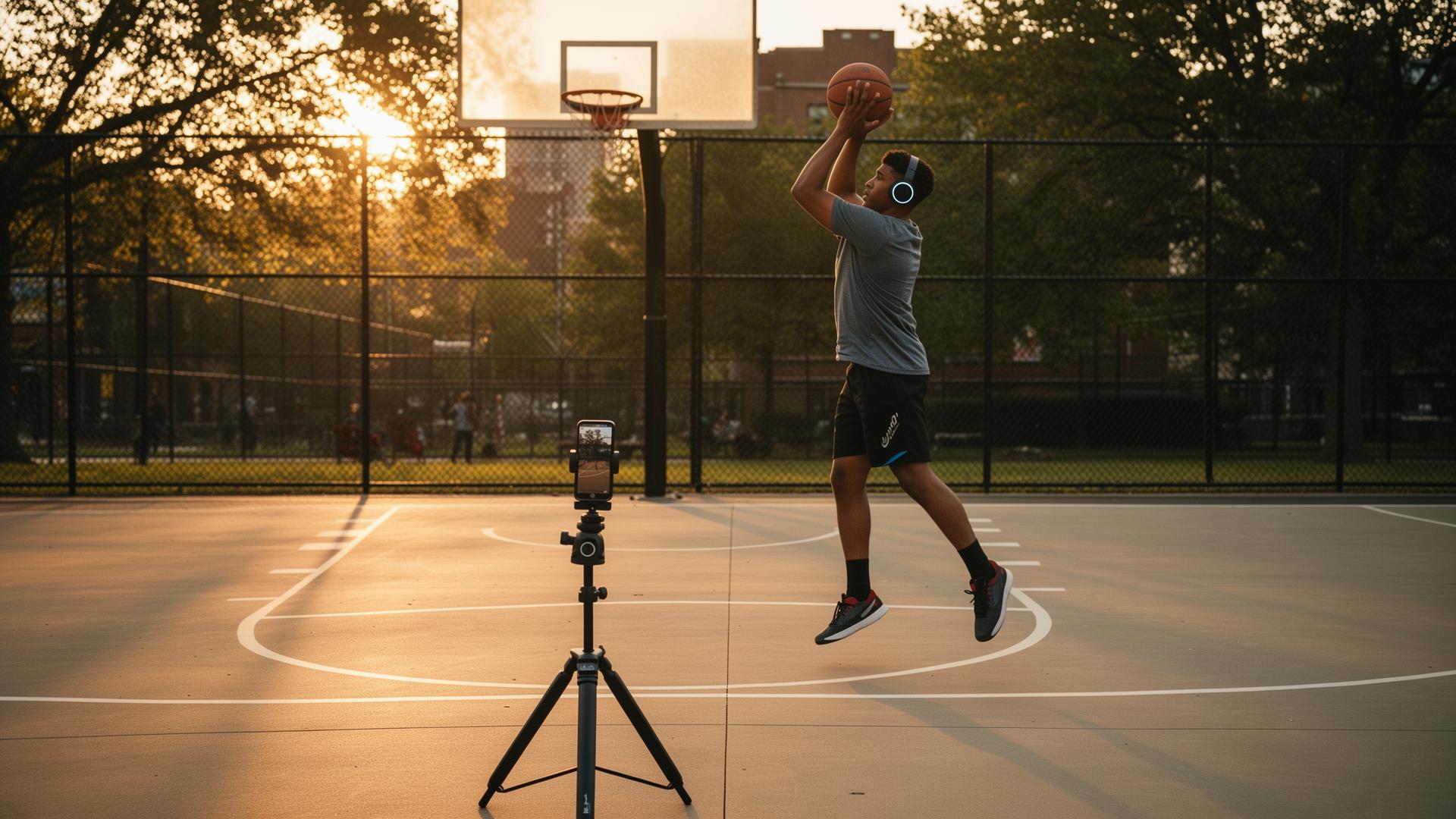
Guide
Best AI Basketball Shooting Coach Apps in 2026
Compare the best AI basketball shooting coach apps in 2026, including Kima, HomeCourt, Jumpshot AI, Ballogy, TruRep, Swish AI, and Dr. Dish.
Shooting mechanics.
What actually changes between your makes and your misses.
Correct Shooting Elbow Alignment (And How to Tell If Yours Is Off)
Your shooting elbow should sit roughly under the ball and travel straight toward the rim. Flare pushes the ball across your body and causes left-right misses.
How to Fix a Flat Shot Arc
A flat shot arc means the ball approaches the rim at too shallow an angle, shrinking your margin for error. Raise your release point and finish upward to fix it.
Why Is My Jump Shot Inconsistent?
Your jump shot is inconsistent because one or more parts of your motion change between reps. Find which part varies, and you fix the shot.
Training.
Drills, volume, and how to structure the reps you take.
Basketball Shooting Drills You Can Do Alone
The best solo shooting drills replace what a partner normally provides: game speed, a rebounding rhythm, accountability, and honest feedback on your form.
How Many Shots a Day Should You Take to Improve?
Most improving players take 150 to 300 focused shots a day. Beyond that, attention drops and extra reps reinforce whatever fault you already had.
How to Practice Free Throws Under Pressure
Practise free throws tired, with consequences, and one at a time. Shooting 50 in a row while fresh trains a situation that never happens in a game.
Youth Shooting Form: What to Fix First, What to Leave Alone
Fix the base and the release path first. Leave the guide hand, the set point height, and anything caused by a lack of strength alone until the player is stronger.
AI coaching.
What AI shooting analysis can and cannot do for a player.
Comparisons.
Honest comparisons of the tools players train with.
Ballogy Alternatives for Solo Shooters
Ballogy is built around assessment and programme structure. If you train alone and want per-rep mechanics feedback instead, Kima is the closer fit.
Best HomeCourt Alternatives for Shooting Form
If you want mechanics feedback rather than drill tracking, the strongest HomeCourt alternatives are Kima for real-time form correction and Ballogy for structured skill assessment.
Kima vs Dr. Dish: App Coaching or Shooting Machine?
Dr. Dish maximises how many shots you take. Kima improves what happens during each one. If you have machine access, they work together rather than against each other.
Kima vs HomeCourt: Which One Should You Use?
Kima analyses your shooting mechanics in real time and tells you what to fix. HomeCourt tracks shots and drills across a broad skill library. They solve different problems.
For coaches.
How coaches use motion analysis and AI to scale their coaching.
Best AI Tools for Basketball Coaches in 2026
The useful AI tools for coaches fall into four groups: game film and tagging, shooting mechanics, player tracking and workload, and admin. Most coaches only need one or two.
Can AI Replace a Private Shooting Coach?
No. AI replaces the measuring and the watching, not the judgement, the accountability, or the relationship. It changes what a private coach is paid for.
How Coaches Use Motion Analysis and AI to Scale Their Coaching
Motion analysis gives a coach a second pair of eyes on every rep, so the reps that happen without you are still coached reps.
How to Run a Shooting Session for a Full Roster With One Phone
Station rotation is the answer. One analysis station, three or four non-analysis stations, and a fixed clock so every player gets measured reps without the gym stalling.
Video Analysis for Basketball Coaches: What to Actually Look At
Most coaches watch shooting film wrong: they watch the ball. Watch the base, then the timing, then the release, and compare makes to misses rather than form to a textbook.
What a Shooting Evaluation Report Should Contain
A useful shooting evaluation is one page: conditions, baseline numbers, consistency, the one priority, the drills that address it, and the date you re-test.